
Bringing Yoga Into Every Stage of the Justice System
The following reflection was written by Judge Dan Healy, a Superior Court judge in Solano County, California, and a longtime advocate for expanding therapeutic and healing-centered approaches within the criminal justice system. Dan has developed and presided over treatment courts focused on substance use, mental health, reentry, and veterans, and in 2024, he completed Prison Yoga Project’s 200-hour Yoga, Social Justice and Leadership training.
Over the past several months, Dan has joined Prison Yoga Project at two gatherings focused on the future of treatment courts—first at a Veterans Treatment Court Symposium in Los Angeles and later at the national RISE26 conference in Nashville. In this reflection, he shares why he believes yoga and other mind-body practices belong not only inside prisons and jails, but throughout the justice system.
By Judge Dan Healy
As I was driving down the coast to Los Angeles back in May to attend a Veterans Treatment Court Symposium, I kept pushing replay on Flea’s new jazz album, specifically an anthem, A Plea, in which he repeats this mantra:
Build a bridge… Shine a light..
Build a bridge…. Shine a light
The goal of my road trip, and another in July to Nashville, was to do just that…. Build bridges between people and organizations working in the criminal justice space, and shine a light on the value of yoga in that space.
Both trips arose from my participation in and promotion of treatment courts—an important trend in criminal justice seeking to bring healing, as opposed to just punitive responses to people engaged in and subject to the criminal justice system.
In this work we pursue accountability by asking justice-involved participants to address the trauma, pain, and resulting damaged thinking and behaviors that lead so many of them into our justice system. (We also call these courts collaborative courts because we work as a team, bringing therapists, case managers, peer mentors, and others into the room to work with our clients on these treatment goals.)
There is a growing consensus in the criminal justice world that, if we are truly seeking justice—accountability, responsibility, restoration—then we need to move beyond systems that simply judge and incarcerate people and instead create the space and motivate people to address the trauma, pain, illnesses, addictions, and corrosive thinking that led them to the justice system in the first place.
These healing approaches are not only more humane, but are in fact demonstrably effective, improving outcomes and public safety.
The vast majority of courts in our country now have some form of treatment court—drug court, mental health court, reentry court, family justice court, and veterans treatment court, for example. We have national and state organizations working to expand these programs and promote real rehabilitation and healing. Part of this work involves building bridges and sharing this wisdom by organizing conferences and training in best healing practices for treatment courts. This is why I was heading to LA, then Nashville.
Expanding the Healing Toolbox
The treatment court world recognizes the need for a broad range of healing responses—often recognized as the “bio/psych/social” spectrum of needs and therapeutic responses. We have seen significant expansion of a range of therapeutic responses such as Medication-Assisted Treatment and Cognitive-Behavioral therapies.
There is also a growing recognition that where we see mental illness, where we see substance use disorders, we usually also see trauma. Best practices and standards increasingly recognize our need to be trauma informed and trauma responsive to these persons and situations.
And yet, at the same time, our justice world has been slow to recognize the range of therapeutic tools that are available, and in my opinion necessary, to do this work. The justice world tends to focus on therapies and theories south of Maslow as I sometimes argue and ignore the wisdom of humanistic psychology, of positive psychology, of mind / body therapies, and of wellness and faith traditions.
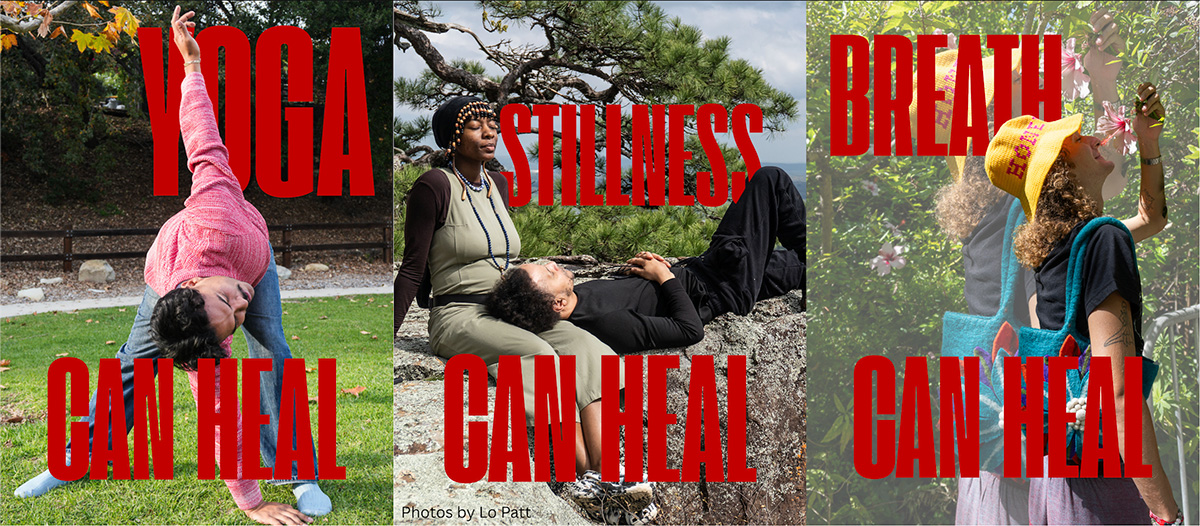
There are important healing lessons and tools we aren’t putting in our justice-to-healing toolbox: Sleep is healing. Nutrition is healing. Sunlight is healing. Exercise is healing. Music is healing.
Yoga is healing.
Building Bridges for Veterans
In May, I was heading to the Bob Hope Patriotic Hall, a historic 10-story hall and service center in downtown Los Angeles dedicated to serving veterans.
We organized a three-day symposium dedicated to improving connections and outcomes for justice-involved veterans. We invited judges, lawyers, case managers, counselors, and probation officers to join us to connect and explore ways to better serve our justice-involved veterans.
It should come as no surprise that veterans who are arrested for criminal activity are often struggling with addictions, illnesses and dysfunction arising from the trauma of their service experiences. More than any other population at the courthouse, people recognize that we owe it to these men and women who served our country to help them address those needs and challenges rather than just abandon them to a jail cell.
At our symposium we talked about building better bridges for veterans to connect them with services and support. We talked about understanding trauma and how trauma permeates their lives. We talked about building and enhancing communities with knowledge of the specific needs and challenges of veterans.
Bill Brown, fellow Californian and Program, Publishing & Advocacy Director for Prison Yoga Project, joined me to build connections and promote the idea that yoga, breath, movement, meditation, and other such practices can and should be an integral part of our treatment responses.
Build a bridge… Shine a light.
Exploring these connections, I asked Miranda Hope—PYP member, yoga therapist, former counselor to veterans at the West LA VA, and granddaughter of Bob Hope—to make a welcoming video. Miranda now resides on the East Coast, but she created a beautiful greeting connecting her grandfather’s work bringing healing through entertainment to troops with our current efforts to connect with veterans and support their healing.
In her message, Miranda reflected on her own experience teaching hundreds of classes in both the VA hospital’s locked psychiatric ward and correctional settings:
“I think my grandfather provided a real model of the importance of going to the center of a crisis and beginning to heal.”
She offered her hope that the symposium would provide participants with “a sense of safety, stability, community, evidence-based practice, learning, and healing.”
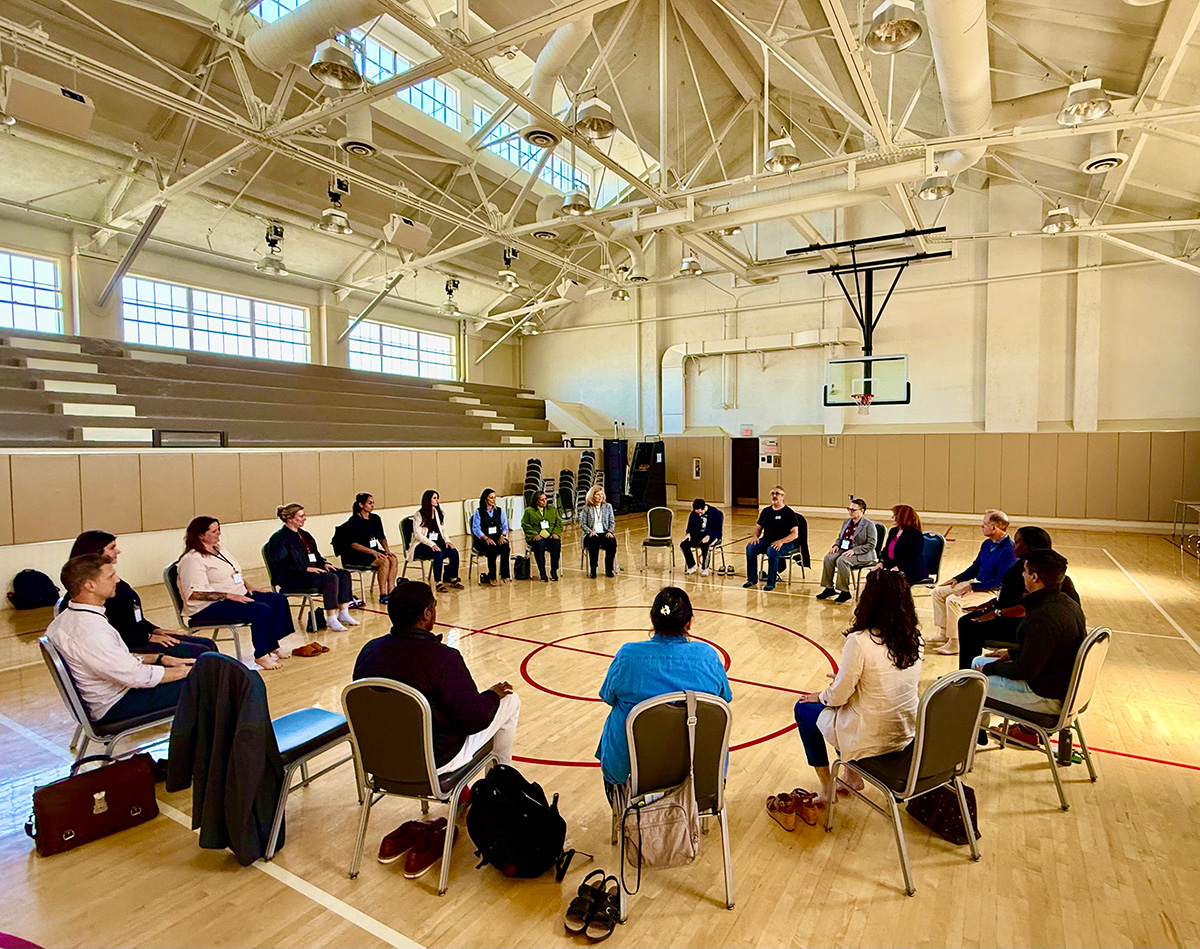
Bill Brown, Prison Yoga Project Director of Programming, Publishing & Advocacy, leads a yoga demonstration at the LA Veterans Treatment Court Symposium in the 10th-floor gymnasium of the Bob Hope Patriotic Hall.
Bill joined us for the entire event, leading a yoga session for attendees in the 10th-floor gymnasium of the hall and discussing the benefits of yoga practices in justice settings. He demonstrated how yoga exercises can help those we serve, and ourselves, to take control of our breath, of our autonomic nervous system and pre-frontal cortex, of our impulses.
Take control of the wheel. And the brake. Find space. And find grace.
Over those three days Bill and I also worked to make connections with sheriffs and correctional officers at the event to bring more yoga programming into our jails, and as a result, we are currently building those programs! The work of promoting yoga and healing practices in justice settings ultimately involves connecting to leaders in these justice settings and to convince them of the benefits of these practices.
Build a bridge. Shine a light.
Bringing the Conversation to Nashville
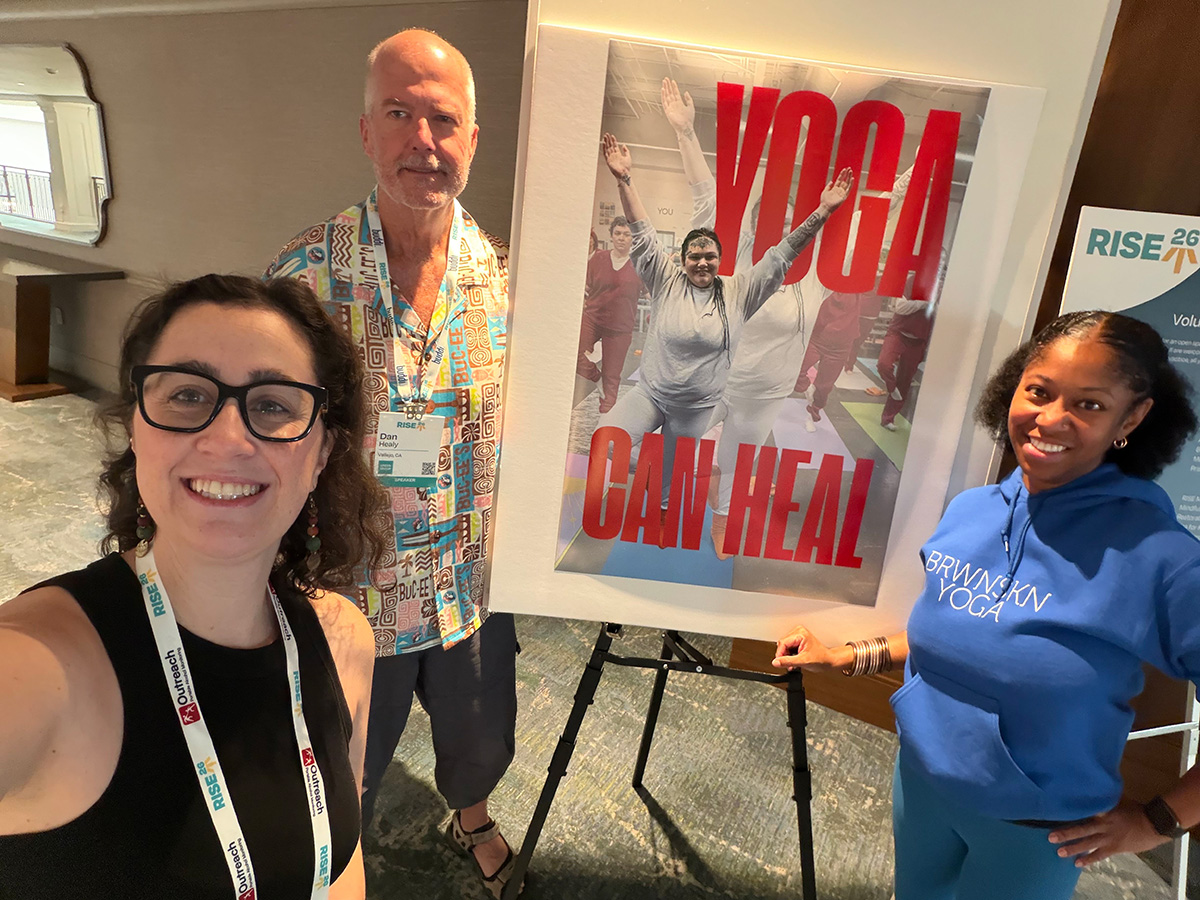
Nicole Helthathler, Dan Healy, and Shawandra Ford at the RISE26 Treatment Court Conference in Nashville, TN
Two months later, I traveled to Nashville, Tennessee, for the huge national RISE26 treatment court conference.
This was the fifth year in a row that conference organizers invited me to make a presentation on the importance and value of yoga as a tool. It was also the second year that the conference allowed me to set up and curate a “Healing Arts Room,” where we offered demonstrations throughout the day of yoga, meditation, journaling, and—for the first time—music therapy.
I was joined in Nashville by PYP Executive Director Nicole Hellthaler in these adventures, as well as by Shawandra Ford, a Memphis yoga therapist, owner of BrwnSkn Yoga, and PYP affiliate and facilitator.
Nicole and Shawandra led several packed-room yoga sessions on a range of topics. Nicole offered a session demonstrating what a yoga class in prison might look like, and Shawandra offered a series of classes, including yoga for youth, Ashtanga yoga, and morning yoga to kick off each day.
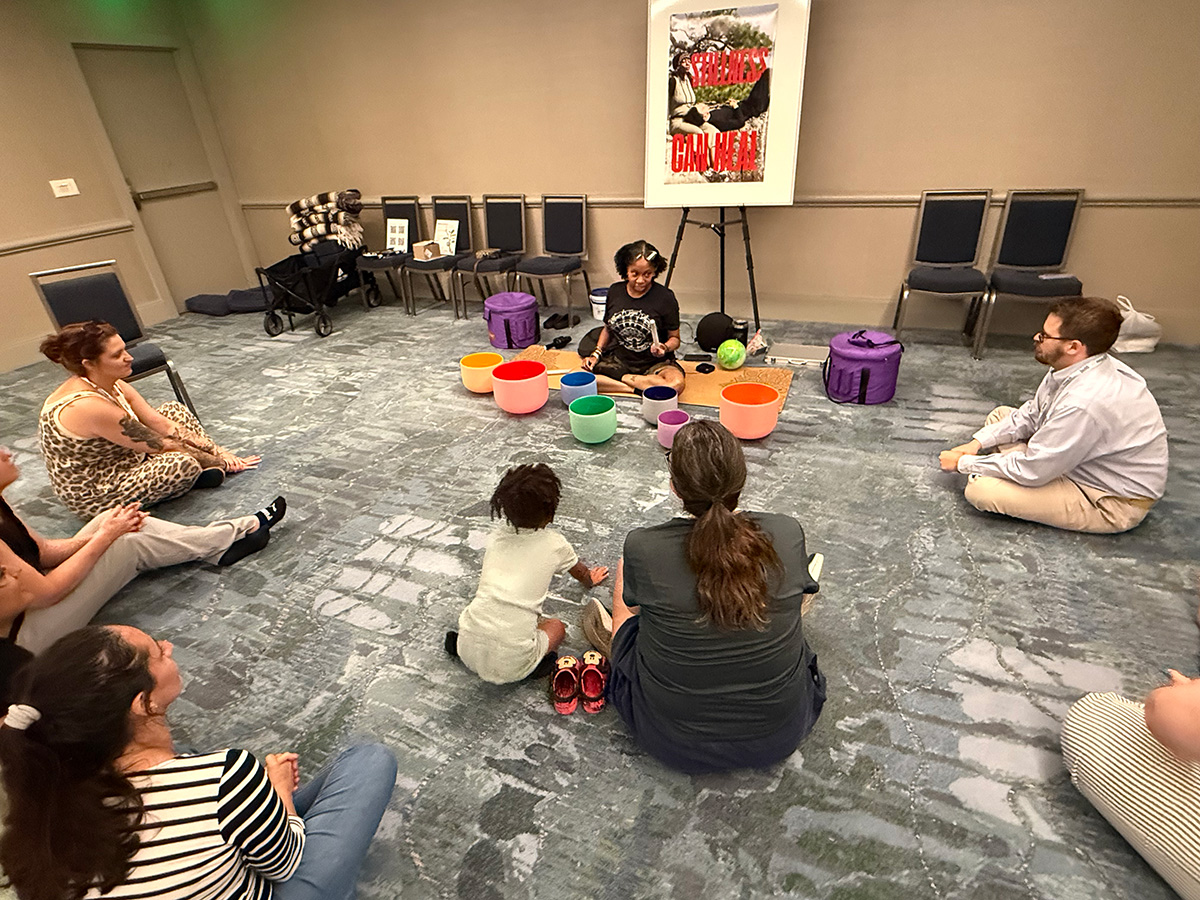
Shawandra Ford leads a sound healing and practice at the conference.
At the conference, Nicole and I led a presentation on the relevance of yoga as an important component of treatment responses, especially for those struggling with trauma and resulting substance use problems.
I talked about the value of yoga as a tool to help people gain more insight into and control of their autonomic nervous system and to learn to observe their own minds and emotions more effectively. To borrow from the stoics, we want people to gain the strength in stillness to know where to persist and know how to resist.
We discussed the importance of creating space between impulses and actions, and the courage of learning to be still and non-reactive as people face their histories and their traumas.
And I talked about the traditional criminal justice trope of being “tough on crime,” noting how nothing is tougher, nothing is more courageous, than having a participant learn to be still and present as they face their pain, their fears, and their shame.
Just putting someone in a cage without doing this necessary work and then expecting them to heal is not tough—it is madness.
After I warmed the room up, Nicole took over and gave a master class in the healing power of yoga in prison settings—how it works, why it works—wrapping up with a plea for people working in the justice system to increase their use of yoga in treatment settings, and also to recognize its potential to improve the resilience and well-being of those working in these fields.
Yoga at Every Stage of the Justice System
These LA and Nashville sessions were really successful, and I believe they demonstrate both the need and the opportunity to bring yoga into every stage of the criminal justice system. Just as we need to support PYP’s efforts to bring yoga into prisons and jails, there are huge opportunities to bring yoga into justice settings working to keep people out of prison, including treatment courts. In treatment courts and justice reform circles, we talk about an intercept map – a map of locations on the road to criminal justice involvement where we should be seeking to intervene in ways that reduce the likelihood of justice system involvement. Can we teach people to address conflicts and trauma in ways that don’t result in calls to the police? Can we find ways to address and resolve conflicts after the police arrive to reduce harm? Can we find ways to inspire people whose illnesses and addictions keep leading them into the justice system to instead seek to heal the things that brought them here? And can we build bridges to enhance reentry and reintegration of people leaving prisons in order to maximize the likelihood of their future success and health?
I believe there is no real justice unless we find ways to help people heal. And there is no way to fully heal unless people learn to effectively manage their own minds, their own bodies, their own relations and their own aspirations.
Yoga should be included in every toolkit we provide to help justice-involved people heal.
I encourage anyone interested in this work to explore your communities and the opportunities to bring yoga and other healing practices into those justice spaces. There is a growing body of evidence and community of people supporting you in those efforts.
We have important work ahead of us in bringing healing practices to our justice-involved populations and the people who serve them. We can and should build these bridges and shine more light on the need for real and meaningful healing in our justice communities.
Build a bridge… Shine a light….
Namaste,
Dan Healy