
Josefin Wikström, European Director of Programs, Prison Yoga Project
“Before, I would get aggressive immediately, without thinking. Now I can notice the anger coming as I feel tension rising in my body, and sometimes I can choose a different response. I have also learned how to use my body to calm my anxiety. I wish everyone in prisons, the juvenile justice system and all children in school could learn these skills early in life.”
— Prison Yoga Project Participant
Every prison system faces the same fundamental challenge: how can people who have often lived with years of trauma, chronic stress, violence, and adversity be supported to make lasting behavioral change?
Education, psychological treatment, substance-use services, and offending-behavior programs remain central to rehabilitation. Yet their success depends partly on something more fundamental; whether a person can regulate stress, sustain attention, manage impulses, and respond thoughtfully rather than react automatically.
This is why self-regulation matters and why the Prison Yoga Project’s structured, mindfulness-based, trauma-informed approach deserves serious consideration as a complementary rehabilitative method.
Rehabilitation Requires More Than Motivation
Prisons ask people to do psychologically demanding work. They are expected to concentrate in education, examine painful experiences in therapy, tolerate frustration in groups, address substance use, and practice new behaviors in an environment that is itself often stressful.
To benefit from these opportunities, a person must be able to remain present when discomfort rises. That capacity is called self-regulation: the ability to manage thoughts, emotions, physiological arousal, and behavior well enough to act purposefully rather than automatically. In the Prison Yoga Project approach, this capacity begins with mindful awareness: learning to notice sensations, thoughts, emotions, and impulses before immediately reacting to them.
Many people enter prison with histories of violence, adversity, disrupted attachment, substance dependence, or mental illness. In one study of adult men in a Welsh prison, 84.2% reported at least one adverse childhood experience and 45.5% reported four or more (Ford et al., 2020). Childhood trauma and adversity are associated with an increased risk of difficulties regulating strong emotions, impulsive behavior, and substance use—factors that are also associated with offending (Dvir et al., 2014; Hughes et al., 2017). This does not excuse criminal behavior or remove personal responsibility. It helps explain why the capacities needed to take responsibility may be impaired and why strengthening these capacities matters.
Accountability and trauma-informed practice are not opposites. Accountability asks a person to take responsibility for their actions and engage with their rehabilitation. Trauma-informed practice helps them build the capacity to do so.
What the Prison Yoga Project Approach Involves
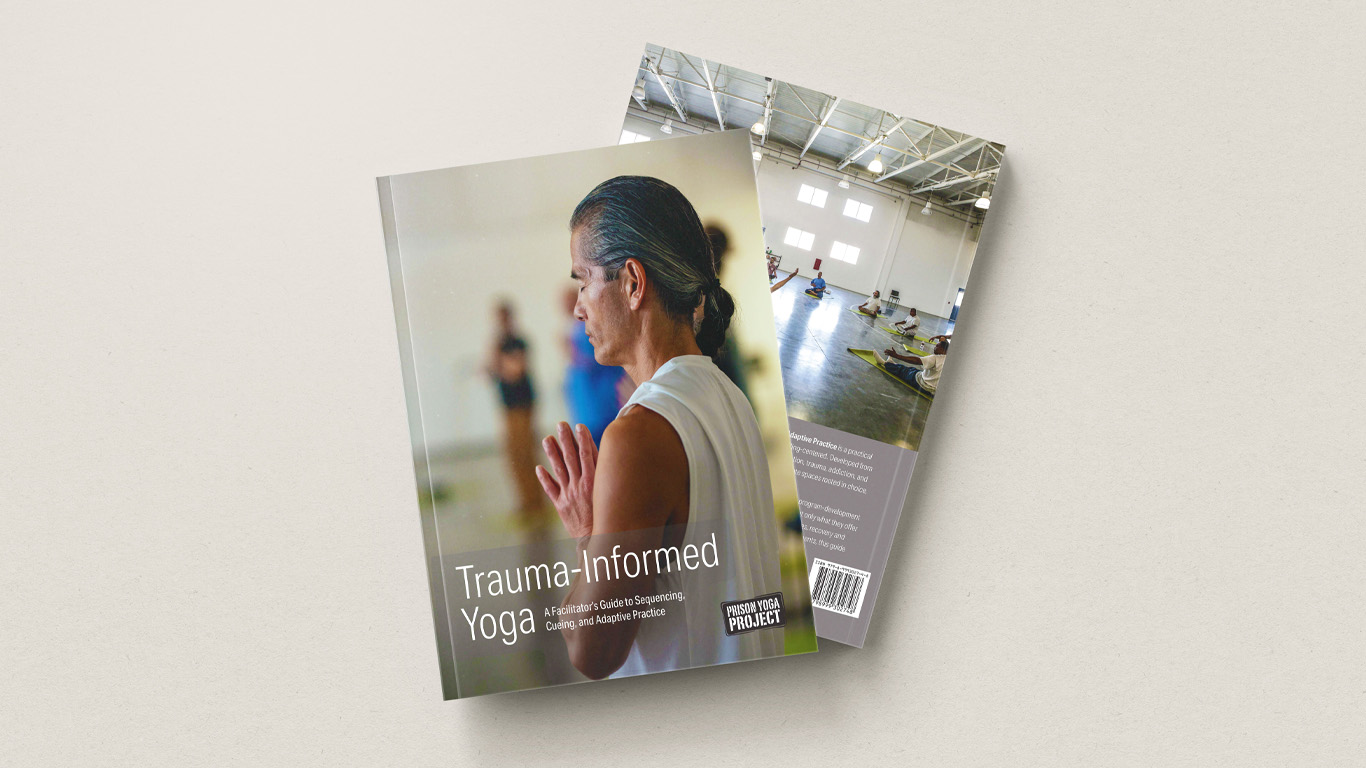
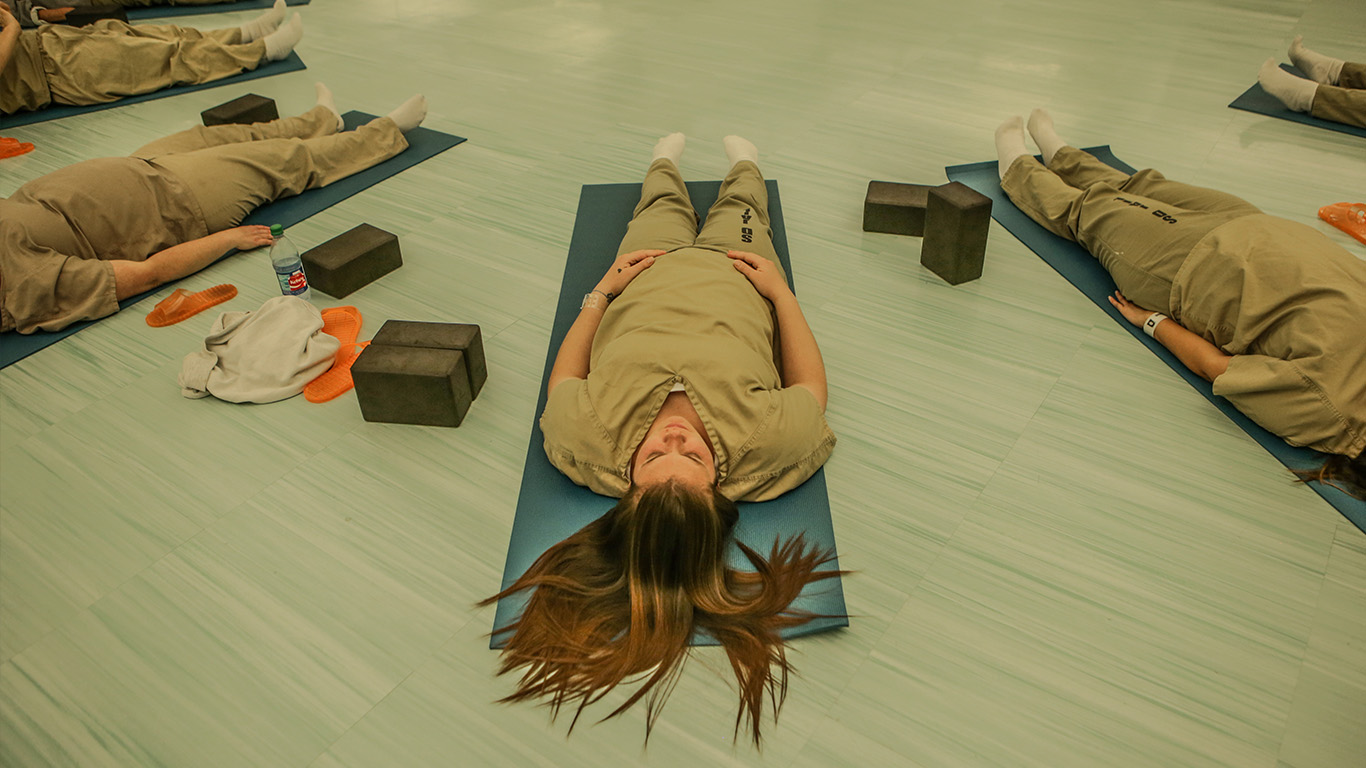
The Prison Yoga Project approach is not simply yoga practiced inside a prison. It is a structured, mindfulness-based methodology developed specifically for correctional and other secure settings. It combines accessible movement, breathing, and attention practices with trauma-informed principles such as choice, predictable instruction, safe boundaries, non-coercion, and awareness of bodily signals. Participants practice noticing activation, pausing, and choosing a response.
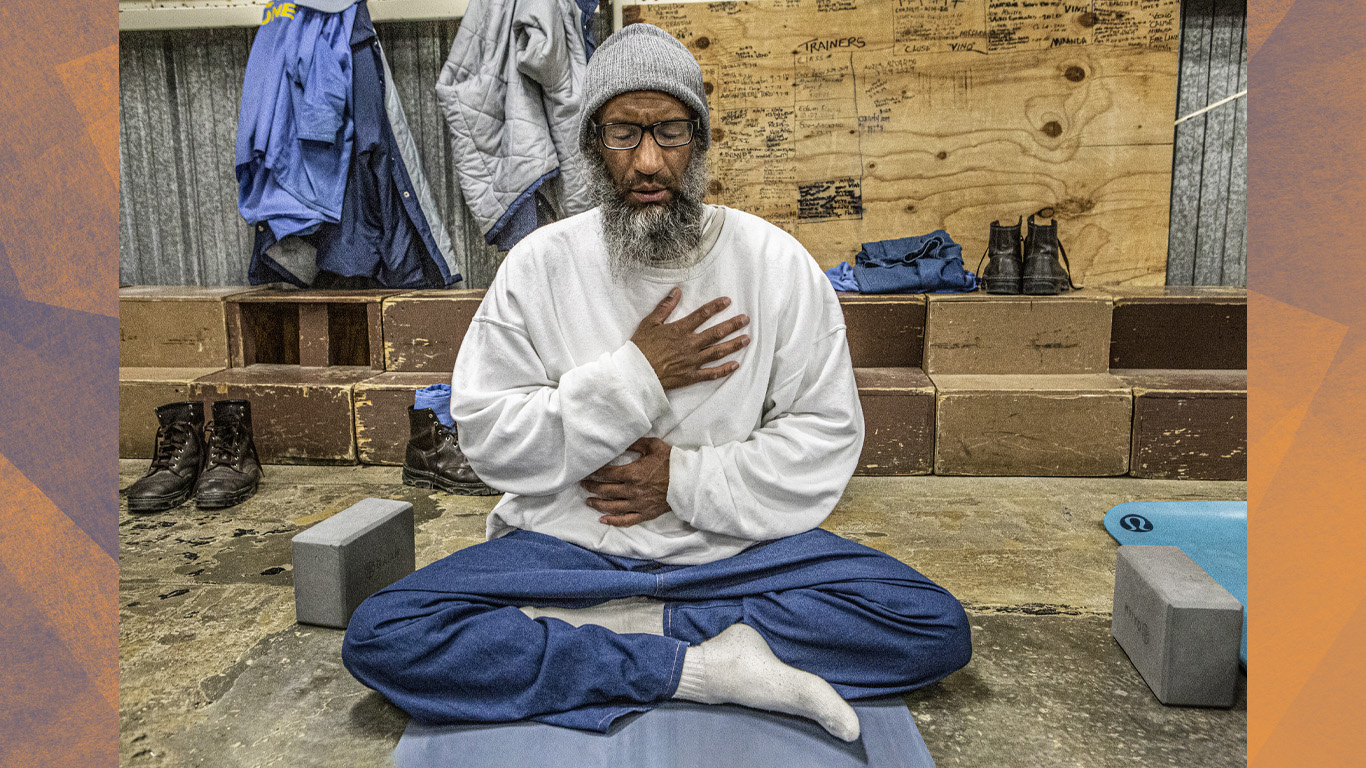
Mindful awareness is central to this process. Stress is not only an idea; it is also a bodily state. By learning to notice rising tension, changes in breathing, or the impulse to react, a participant creates a small but important space between an internal experience and an action. Slowing the breath, staying present with manageable discomfort, and making an intentional choice are practical behavioral skills. The method starts with embodied awareness, while its intended outcomes—attention, emotional regulation, and impulse control—are central to rehabilitation.
The Prison Yoga Project approach is not intended to replace psychological therapy, education, substance-use treatment, or offending-behavior programs. Its value lies in helping people develop the awareness and self-regulation needed to engage with them more effectively.
What the Research Shows
The evidence base for structured yoga in correctional and secure settings includes controlled studies, randomized trials, and a systematic review.
In 2013, researchers at the University of Oxford conducted a controlled study across seven prisons and correctional institutions in England. Participants who completed the ten-week course showed improved behavioral control, reduced psychological distress, and better performance on a cognitive task measuring sustained attention compared with those who continued with their usual prison activities (Bilderbeck et al., 2013).
A separate randomized controlled study on the Swedish Krimyoga project followed 152 participants across nine medium- and high-security prisons. The study used broader outcome measures, computerized testing before and after the intervention, and an active comparison group whose participants engaged in other physical activity. Participants in the yoga group reported reduced stress, improved psychological well-being, and better sleep. Compared with the control group, they also showed improved emotional well-being, reduced antisocial behavior, and better performance on a computerized test of attention and impulse control (Kerekes et al., 2017). Subsequent analyses reported reduced psychological distress and increased self-directedness and character maturity, constructs related to responsibility, purposeful behavior, and self-regulation (Kerekes et al., 2019; Sfendla et al., 2018). Prison Yoga Project has contributed educational materials to the development of the Krimyoga project.
A systematic review and meta-analysis of yoga and mindfulness meditation studies in prisons found improvements in psychological well-being and behavioral functioning (Auty et al., 2017).
Related evidence from secure forensic psychiatric care strengthens this wider body of work, although it is not identical to prison research. The trauma-adapted yoga program was developed by Josefin Wikström in collaboration with colleagues and research partners. This specialist expertise also informs Prison Yoga Project’s continuing methodological development and international collaborations.
In a ten-week study, the program was associated with reductions in anxiety, hostility, negative affect, interpersonal sensitivity, psychological distress, and bodily pain, alongside improved self-directedness (Kerekes, 2024).
A subsequent qualitative study within the same forensic psychiatric research program adds the participants’ own perspectives. Participants described greater bodily presence, temporary relief from worry and the uncertainty of institutional life, and an improved ability to regulate difficult thoughts and emotions such as irritation and anger. They also described the adaptable, predictable, and choice-based format as strengthening autonomy and competence. For some, the group format fostered a sense of belonging, while others found it more challenging because of social anxiety, highlighting the importance of skilled and flexible facilitation (Lundström et al., 2025).
The potential relevance of yoga-based interventions also extends to children and adolescents. A 2024 integrative review examined 16 studies involving more than 1,000 participants between the ages of 5 and 19 in school and psychiatric settings. Across the studies, yoga-based interventions were associated with reduced psychiatric symptoms, improved self-control and cognitive functioning, greater relaxation, and enhanced well-being. These findings support further research into developmentally adapted yoga as an early and preventive complement to established care (Kerekes et al., 2024).
Across these studies, the pattern is promising: structured, prison-adapted yoga and related mindfulness practices are associated with improvements in several capacities relevant to rehabilitation.
Pausing before acting on anger, remaining present during distress, and recovering from physiological activation all depend on noticing what is happening before reacting automatically. These capacities can support safer behaviour, participation in treatment and successful reintegration after release.
Building Internal Capacity
An important part of this work is combining internal capacity with external specialized expertise. Physical education staff, correctional officers, healthcare professionals, psychologists, and other rehabilitation staff can be trained to use basic, structured practices within their existing roles. At the same time, Prison Yoga Project facilitators and other external providers with advanced expertise in mindfulness-based, trauma-informed yoga for mental illness, trauma, and complex needs play an essential role in developing and leading programs, supporting participants who require additional care, and providing education, supervision, and quality assurance.
The aim should not be to transfer all instruction to correctional staff or to rely exclusively on visiting instructors. A sustainable model is based on collaboration: trained staff provide continuity, local integration, and day-to-day accessibility, while appropriately qualified external specialists contribute methodological depth, clinical understanding, and experience in adapting the practice to trauma, mental illness, institutional conditions, and complex needs. Responsibilities can be allocated according to the facility’s operational needs, participant characteristics, and program complexity.
This combined model builds knowledge within the institution, supports quality, consistency, and safety, reduces vulnerability if an individual provider leaves, and makes programs easier to sustain and adapt over time. It may also offer a more cost-effective approach by strengthening internal capacity while retaining access to the specialist expertise required for more complex interventions.
Training may benefit staff as well as the people they support. Correctional professionals worldwide work under sustained pressure and are repeatedly exposed to conflict, distress, and, in some cases, secondary trauma. In international Prison Yoga Project training programs, staff members have frequently reported better stress management, improved sleep, and stronger emotional regulation while learning the same mindful self-regulation skills they can later help participants practice. These observations still require systematic evaluation, but they suggest that collaboration between trained staff and external specialists may strengthen the quality and sustainability of rehabilitation services while also supporting staff well-being, resilience, and professional capacity.
A Complementary Method, Not a Cure-All
Prison systems face high levels of mental illness, substance dependence, conflict, and chronic stress. No single program can solve these problems. Yoga cannot repair overcrowding, replace clinical care, or compensate for unsafe conditions.
The Prison Yoga Project approach is not presented as a cure. It is a practical adjunct that may help people develop mindful awareness and the self-regulation needed to engage more effectively in rehabilitation, while gaining skills they can carry into life beyond prison.
Programs should therefore be structured, voluntary, accessible, and adapted to the realities of secure environments. Within the Prison Yoga Project model, instructors need appropriate training in the methodology as well as an understanding of trauma, mental health, professional boundaries, and prison safety. Implementation should include supervision, attention to fidelity, and evaluation.
Prison Yoga Project’s long experience in correctional settings and its therapeutic alliance with the Trauma Research Foundation support the continued development and refinement of this specialized approach. The alliance is a professional collaboration and should not be understood as a substitute for outcome research.
The Standard Must Be Evidence
Public institutions must scrutinize how they use time and money. Rehabilitation programs should be able to explain what they do, why they may work, what the evidence shows, and where further evaluation is needed.
If a structured, affordable, mindfulness-based, and carefully evaluated practice can strengthen these capacities, it deserves a place in the continuing development of evidence-informed rehabilitation.
Most people in prison will eventually return to society—as our neighbors, coworkers, friends, and family members. The question is not only how we manage people during incarceration, but who we want them to be when they return: better able to regulate stress, manage impulses, take responsibility, participate in treatment, and build safer lives.
Rehabilitation is ultimately an investment in the communities to which they will return.
References
Auty, K. M., Cope, A., & Liebling, A. (2017). A systematic review and meta-analysis of yoga and mindfulness meditation in prison: Effects on psychological well-being and behavioural functioning. International Journal of Offender Therapy and Comparative Criminology, 61(6), 689–710. https://doi.org/10.1177/0306624X15602514
Bilderbeck, A. C., Farias, M., Brazil, I. A., Jakobowitz, S., & Wikholm, C. (2013). Participation in a 10-week course of yoga improves behavioural control and decreases psychological distress in a prison population. Journal of Psychiatric Research, 47(10), 1438–1445. https://doi.org/10.1016/j.jpsychires.2013.06.014
Dvir, Y., Ford, J. D., Hill, M., & Frazier, J. A. (2014). Childhood maltreatment, emotional dysregulation, and psychiatric comorbidities. Harvard Review of Psychiatry, 22(3), 149–161. https://doi.org/10.1097/HRP.0000000000000014
Ford, K., Bellis, M. A., Hughes, K., Barton, E. R., & Newbury, A. (2020). Adverse childhood experiences: A retrospective study to understand their associations with lifetime mental health diagnosis, self-harm or suicide attempt, and current low mental wellbeing in a male Welsh prison population. Health & Justice, 8, 13. https://doi.org/10.1186/s40352-020-00115-5
Hughes, K., Bellis, M. A., Hardcastle, K. A., Sethi, D., Butchart, A., Mikton, C., Jones, L., & Dunne, M. P. (2017). The effect of multiple adverse childhood experiences on health: A systematic review and meta-analysis. The Lancet Public Health, 2(8), e356–e366. https://doi.org/10.1016/S2468-2667(17)30118-4
Kerekes, N. (2024). Exploring the impact of trauma-adapted yoga in forensic psychiatry. Psychiatry Research, 335, 115879. https://doi.org/10.1016/j.psychres.2024.115879
Kerekes, N., Brändström, S., & Nilsson, T. (2019). Imprisoning yoga: Yoga practice may increase the character maturity of male prison inmates. Frontiers in Psychiatry, 10, 406. https://doi.org/10.3389/fpsyt.2019.00406
Kerekes, N., Fielding, C., & Apelqvist, S. (2017). Yoga in correctional settings: A randomized controlled study. Frontiers in Psychiatry, 8, 204. https://doi.org/10.3389/fpsyt.2017.00204
Kerekes, N., Söderström, A., Holmberg, C., & Hedman Ahlström, B. (2024). Yoga for children and adolescents: A decade-long integrative review on feasibility and efficacy in school-based and psychiatric care interventions. Journal of Psychiatric Research, 180, 489–499. https://doi.org/10.1016/j.jpsychires.2024.11.016
Lundström, S., Kerekes, N., & Johansson, C. (2025). Patients’ experience of trauma-adapted yoga as a health-promoting activity in forensic psychiatric care. International Journal of Qualitative Studies on Health and Well-being, 20(1), 2509803. https://doi.org/10.1080/17482631.2025.2509803
Sfendla, A., Malmström, P., Torstensson, S., & Kerekes, N. (2018). Yoga practice reduces the psychological distress levels of prison inmates. Frontiers in Psychiatry, 9, 407. https://doi.org/10.3389/fpsyt.2018.00407