
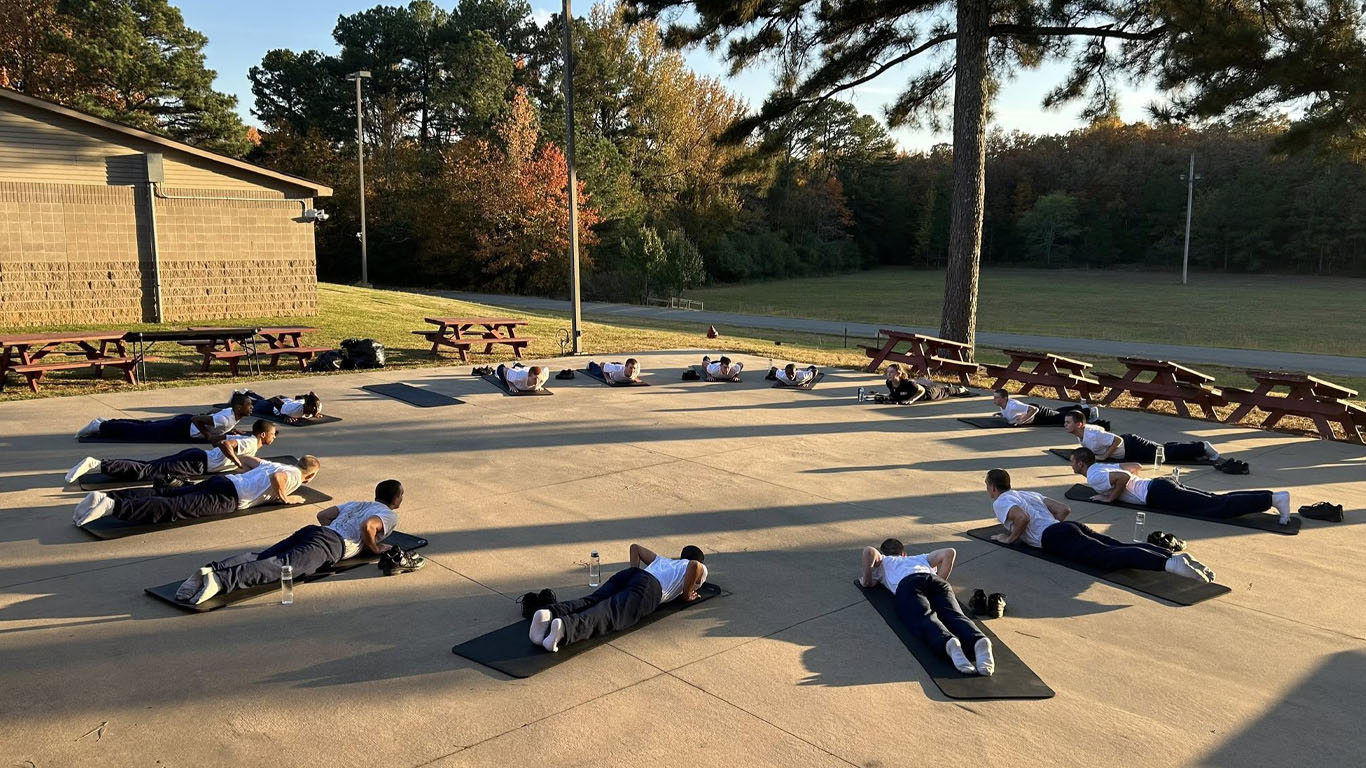
When students begin participating, I often notice a deep disconnection from themselves and from a sense of safety. Many arrive hypervigilant, easily distracted, and unsure how to coordinate their bodies to move along the cues they hear. There can be a lack of self-trust, confidence, and self-compassion.
Over time, I watch that begin to shift.
Through the practice of yoga, students start to expand. Aligning with the practice, they steadily build awareness and connection between their mind, body, and spirit. Joy emerges. There is laughter during games, smiles in the middle of silly poses (and even challenging ones). In shapes like mountain pose that invite stillness, I see them connect to a sense of calm and peace. It doesn’t take long for them to no longer look like the unsure distrustful kids I first saw.
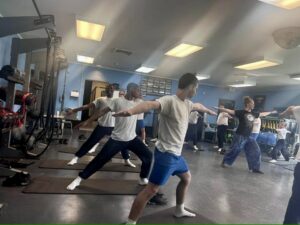
They begin to soften as they rebuild their strength. They learn that this space is steady, that compassion and nonjudgment can be reliable. Many of these young people have experienced profound trauma and may have never had healthy coping strategies modeled for them. Eventually, I see even the most guarded students learn something as simple and powerful as closing their eyes and placing a hand over their heart.
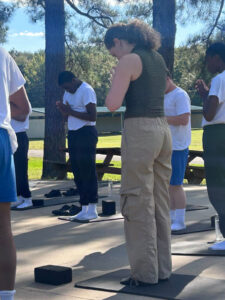
Last week, we practiced outside on a beautiful day. The staff made space for us on the rec yard, where we can grow a deeper connection between the internal and external environment. On days we’re outside I especially enjoy offering grounding techniques to find presence through the senses. Connecting to what we can see in the sky, hear from the environment, and feel from the temperature, we then bring awareness to our internal sensations.
One student looked up at the sky with the biggest smile. He noticed the birds passing and said the sky had never looked so bright. He shared that he felt high without taking anything, that he hadn’t felt this happy and free in a long time.
At the end of class, a staff member quietly shared that it was remarkable this young person was even participating, he had experienced significant gun violence and personal injuries just five weeks prior.
There is no doubt that this work is healing.
It is powerful to witness our trauma impacted youth, especially Black youth, who are disproportionately incarcerated, experiencing even a moment of joy, restoration, or self-confidence. Many of the students I teach also navigate learning challenges and have been repeatedly discouraged from trying. In our classes, we create space to rebuild that trust and effort.
As a trauma-informed facilitator, I show up with a consistent level of care and support, encouraging students to try without fear of judgment, normalizing practicing kindness toward themselves and one another. We introduce principles of non-harm and compassion, giving them a new opportunity forward, centered on healing.
In a PYP class, young people who have been harmed by the system and in turn perpetuated harm, have the opportunity to be seen, heard, and supported. To be cared for instead of cast away. They are given tools to regulate their nervous systems and build lifelong personal connections to their bodies. This connection turns into personal accountability. They see that they are valuable, that their choices do matter, and that there is room for themselves and the world around them to experience less suffering. My hope is that they will know, they are worth it.